China’s securities regulator is cracking down on the quick-developing hedge-fund enterprise, investigating ten alleged wrongdoing cases.
Officials are probing private fund practices, including marketplace manipulation, misappropriation of customer budget, insider buying and selling, and buying and selling through managers using personalty debts, the China Securities Regulatory Commission said in an announcement on an internet site on Friday. Some funds used the Hong Kong-Shanghai stock connect to manipulate fees, and a few personnel sought private gaibyof exploiting the hedging mechanism for stock index futures, it said.
China’s booming money-control industry consists of personal securities funding funds, which take cash from rich traders and employ hedge-fund-like strategies. They’re one-of-a-kind from mutual finances, which might be open to most people, or motors that spend money on non-public organizations.
Already hit by scandal and the jailing of “hedge fund brother No. 1” Xu Xiang for market manipulation, the private price range industry faces a growing tide of criminal breaches, consistent with the CSRC. The regulator said many finances were registered with fake data, illegally raised money, or misappropriated property, while others manipulated markets and traded on inner facts.
The crackdown comes as China mounts a marketing campaign to restrict financial risks lurking in the economic system. Last month, the securities regulator shelved applications for a few mutual budgets that plan to allocate at least eighty percent of their portfolios to Hong Kong-traded shares as a part of this power.
At the same time, China is also beginning monetary enterprise withto foreign firms. Global cash managers, including Man Group Plc, UBS Asset Management, and Fidelity International, have gotten approval to begin private securities finances following regulators’ decision to open the market to worldwide managers closing 12 months.
The enforcement attempt associated with the personal price range is intended to incorporate a “fashion of growing legal violations,” the regulator stated, including cracking down “significantly.”
An overall of 8,294 hedge fund organizations controlled approximately 2. Three trillion yuan ($348 billion) as of Nov. 30 in private securities funding budget, in step with statistics from the Asset Management Association of China. While assets under control slipped during these 12 months, the enterprise quickly increased after its best start in 2004.
In March, the CSRC fined an individual for offenses, which included using the Shanghai-Hong Kong connect to govern a Shanghai inventory. Former hedge fund supervisor Xu, the excessive-flying “Brother No. 1,” was jailed for five-and-a-1/2 years in January for marketplace manipulation.
Autumn rains came too late to save the stunted stalks of Shu Xinguo’s corn crop, withered with the aid of a dry July developing season.
“We rely upon the climate for our residing,” stated Shu, weary and resigned, his tanned palms hoisting bundles of his closing crop — green and yellow tobacco leaves — onto a 3-wheeled tractor. “There’s no water for irrigation, and the property in the village has no water either.”
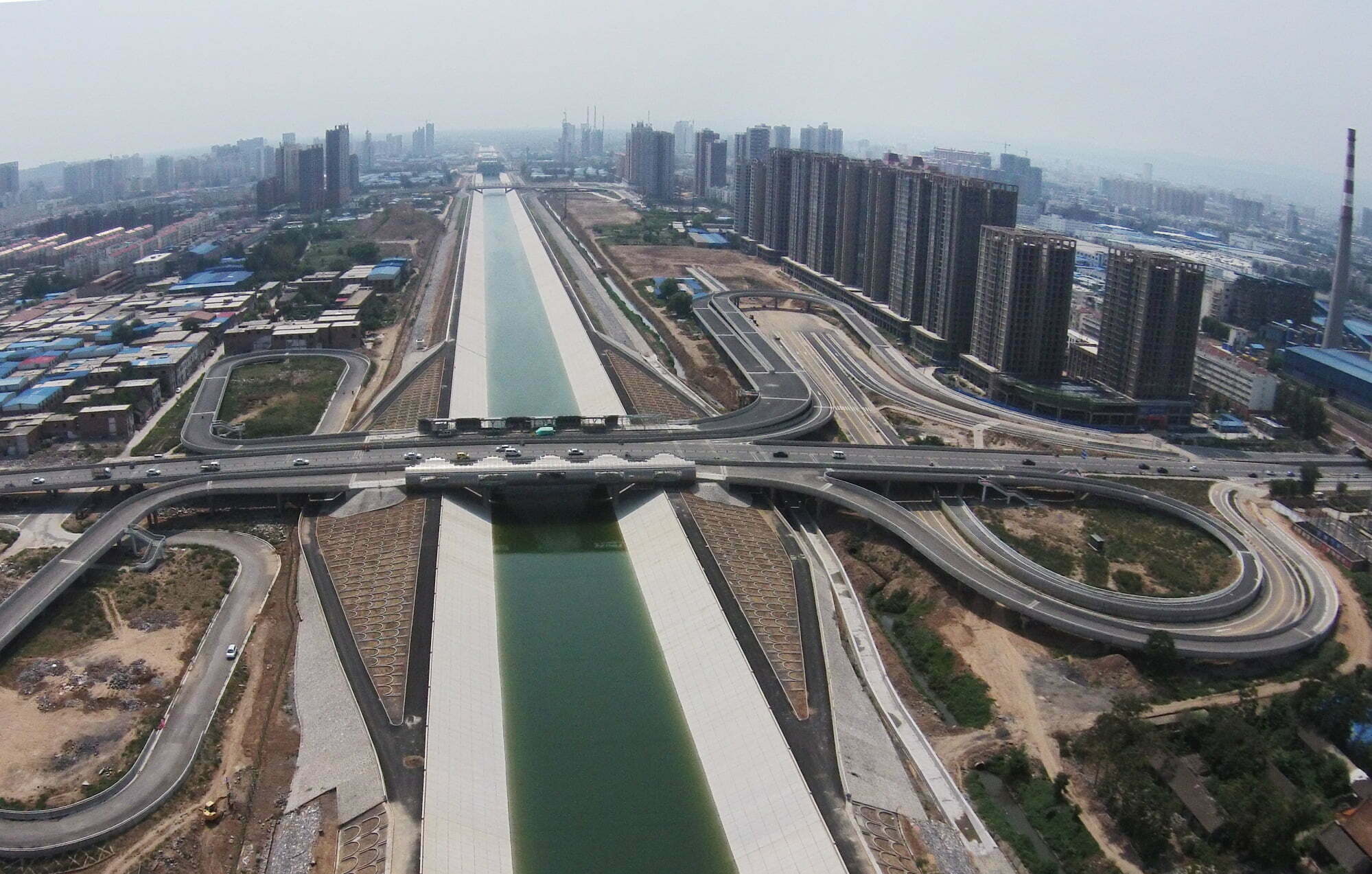
Sixty kilometers away, China’s largest aqueduct transports as much as 18.3 million cubic meters of sparkling water an afternoon through Shu’s province to quench Beijing’s growing thirst in the north. None of it comes to Shu’s village or many farms.
It’s China’s age-vintage predicament: a tug between the farms that feed the kingdom and the hovering needs of enterprise and city-dwellers in threaded northern plains.
With extra rain in the south and not enough in the north, China’s solution is as simple as it becomes expensive: Build three massive aqueducts to divert the water for an anticipated fee of more than yuan ($76 billion).
The result is the sector’s most formidable water transfer application, the South-to-North Water Diversion undertaking. Its middle channel—from the Danjiangkou reservoir to Beijing and Tianjin—was completed in 2014. Proposed at the time of Chairman Mao Zedong, it was a lovely engineering feat. Some 11 billion cubic meters of water have traversed the 1,432-km-long waterway, offering factories, groups, and fifty-three million citizens.
It isn’t enough.
“As the United States of America’s economic system develops, industries are using more water,” stated Huanguang Qiu, a professor at the School of Agricultural Economics and Rural Development at Renmin University. “And the opposition turns into even more fierce.”
Beijing, which receives about 70 percent of its water from the South-North diversion assignment, is anticipated to add another 2 million people before the authorities cap the metropolis’s populace at 23 million.
President Xi Jinping announced plans in April to build a new town, Xiong, about one hundred kilometers southwest of the capital, with an expected five. Four million people would additionally be fed using the aqueduct.
Even though the waterway peaked in 2019, China’s demand is developing so quickly that different answers might be wanted. Rivers and aquifers poisoned with the aid of years of bad management over fertilizer use and factory effluent need to be cleaned up, waste reined in, and offenders punished.
The result is a revolution in China’s approach, video display units, and its most valuable resource. Farms are converting vegetation and embracing generation to preserve irrigation, industries are being pressured to ease uthe p affluent, citizens are taking to social media to document offenders, and the authorities are adapting a long-held food security coverage to relmomoreer on imports of water-hungry plants.
Part of the hassle is that China doesn’t need to locate sufficient water to deliver its growing demand; it also wishes to replenish aquifers that have been depleted for years.
“Industries and towns were drawing down underground water as deep as possible, which took away water from farming,” said Yu Hequn, director-generate, construction and Administration Bureau of the South-to-North Water Diversion Central Route Project. “Now we’re returning water to agriculture and the surroundings.”
The Ministry of Environmental Protection stated that by 2015, 230,000 square kilometers had been laid low due to over-extraction of groundwater, mainly in the north, leading to land subsidence, seawater intrusion, and other troubles.
The depletion is worst in northern provinces like Hebei, which surrounds Beijing, and neighboring Henan. At least seven massive sinkholes have been suggested in Hebei, wherein farmers have drilled ever-deeper boreholes. The government has promised to divert billions of cubic meters of water from the Yellow River to farms to ease the lack. Even so, Hebei may face a water shortage of one billion cubic meters in 2030, Zhang Tielong, deputy head of the provincial water resources department, said the South-North waterway opened in 2014.
One way to reduce the discount on groundwater is through taxes. Last month, the authorities improved a water aid tax covering nine municipalities and provinces, with responsibilities ramping up if quotas are passed. Regular water taxi rates were maximum in Beijing and Tianjin, consistent with China’s finance ministry. Underground water will be taxed twice the price of flood water.


